

 Body Painting - The Intricacies
The origin of body painting is unknown, but its use has been widespread - sometimes as an art form, sometimes as a part of tradition, and the other times, as a necessity. The evidence of body painting is found in ancient practices across various cultures and remains a popular fashion statement in the present times. There is no set style or technique for body painting. It can be a localized design or a fuller one, covering the entire body in some cases. The color pigments used can be natural or synthetic. Similarly, it can be a work of an expert or an amateurish hand of a novice. However, unlike permanent tattoos, body paints are temporary or semi-permanent in nature.
The Geographical Spread
Painting the body was prevalent in ancient Egyptian civilization, where Pharaohs and high-class individuals painted their faces in red ochre & white pigments, and eyes in kohl. The Himba group of Namibia also generously uses red ochre. These people paint their entire bodies in the uniform pigment, as a traditional practice. In India, body painting is an elaborate work of expertise, which requires training and a lot of experience. One of the best examples of this art is the make-up of Kathakali dancers that involves the use of white, red, black, and yellow colors against a base of bottle green color, on face.


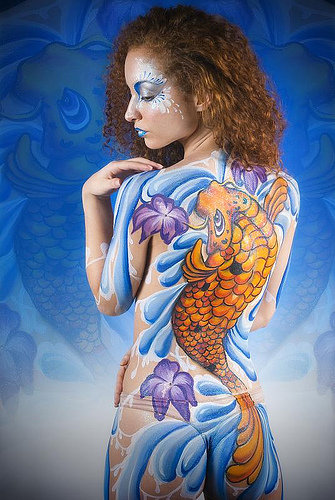
 Are you considering making a living (or at least a little money on the side) doing body painting? Is it even possible to make a living doing body painting? Yes, you can make good money as a 'pro' body painter, and even kids as young as twelve have made good money (like $500-$400 in an afternoon) doing simple painting techniques like airbrushed temporary tattoos at fairs and festivals.


